Anxious-Avoidant

Avoidant: Emotions Repressed Beneath Conscious Level

Avoidant Brain

Avoidant Brain

Avoidants are known to be viscerally effected by events that would normally trigger conscious emotions — such events are often reflected in a racing heart, disturbed digestion, and poor sleep even when the Dismissive-Avoidant consciously feels nothing — and will tell you he or she doesn’t really mind that their partner is gone since it’s such a great opportunity to get more work done away from the partner’s demands for attention.

This blockade on attachment-related emotions is a defense mechanism; it was necessary in childhood to survive a caregiver’s inattention or abuse. The feelings of being unloved and unwanted that might otherwise have destroyed the child’s will to live are shunted aside and never reach a conscious level; avoidants tend to have poor memories of emotional events and report unreliably when asked about their childhoods.

An interesting post on the blog StopTheStorm discusses this phenomenon:

When it comes to thinking about, describing and feeling emotions, I always have a sideline running in the background concerning my father. I think about the dismissive-avoidant insecure attachment disorder patterns as researchers are now being able to actually see them operate through visually watching the brains of such people.

Researchers can watch how some brains create in effect a firewall that leaves actual emotions as they ARE triggered in the body completely out of conscious awareness. Researchers can see the emotion being experienced in the brain AND at the same time be screened from a person so that they do not know they are even there — AT ALL. The brain is consuming massive amounts of energy during this screening process, and these ‘brain-holders’ never know it.

There are specific early caregiver-to-infant interactions that create these brains from birth to age one. These changed brains are intimately connected to the changed nervous system and body of their ‘holders’. Being cared for by unresponsive, unemotional, cold, depressed and ‘blank-faced’ caregivers are some of the ways these dismissive-avoidant brains are created in infants from the beginning.

These same infants, had they been interacted with by securely attached and appropriate-adequate early caregivers would have developed entirely different brains. My father was an unwanted infant born to an unwilling and depressed mother, raised by his teenage sister primarily who was not caring or nurturing. In the end, my father’s dismissive-avoidant insecurely attached brain worked very well on his behalf as he could NOT FEEL — did not HAVE to feel — and hence could ignore what he NEEDED to pay attention to and react to appropriately.

I have an important person I care deeply about who I believe also has a dismissive-avoidant insecure attachment disorder, and I can see how easily this pattern fits with Narcissistic Personality Disorder. Very nicely indeed. The fact is that people who fit into this range can most often manage to get along just fine — but have extremely limited (if any) ability to FEEL and therefore to CARE how others feel, either. It would be easy to call them ‘intimacy disabled’.

One of the better studies of brain activation in avoidants concluded:

As a whole, these brain imaging data support but also extend the notion put forward by AT (Mikulincer and Shaver, 2007) that attachment avoidance is associated with a preferential use of emotion suppression in interpersonal/social contexts. Furthermore, they reveal that reappraisal may not work for these individuals, leading to impaired down-regulation of amygdala reactivity. This pattern may help understand why avoidantly attached individuals tend to become highly emotional when their preferred regulation strategies fail or cannot be employed.

Translated, when deactivating strategies (intended to reduce the importance of an attachment relationship to the avoidant) fail to work or can’t be used, the avoidant can be overwhelmed by unprocessed feelings that are normally blocked or avoided. The avoidant strategy is to never be put into a position where deep feelings of loss might break out by distancing anyone who gets too close and minimizing the importance of attached others.


[Note: If you’re looking for information on your dismissive or fearful-avoidant spouse or lover, I’ve published a book on the topic: Avoidant: How to Love (or Leave) a Dismissive Partner.]

Other posts on this topic:

Dismissive-Avoidants as Parents
Subconscious Positivity Predicts Marriage Success…
Anxious-Preoccupied / Dismissive-Avoidant Couples: the Silent Treatment
Anxious-Preoccupied: Stuck on the Dismissive?
“Bad Boyfriends” – Useful for Improving Current Relationships
Asian Culture and Avoidant Attachment
“The Science of Happily Ever After” – Couples Communications
Attachment Type Combinations in Relationships
Serial Monogamy: the Fearful-Avoidant Do It Faster
Type: Fearful-Avoidant (aka Anxious-Avoidant)
Type: Dismissive-Avoidant

Anxious-Preoccupied / Dismissive-Avoidant Couples: the Silent Treatment

The Silent Treatment

The Silent Treatment

I’ve discussed the common (and usually unhappy) pairing of the Anxious-Preoccupied with a Dismissive in this post.

Science Daily has a story on a big meta-analysis of 74 studies, including more than 14,000 participants, “A Meta-Analytical Review of the Demand/Withdraw Pattern of Interaction and its Associations with Individual, Relational, and Communicative Outcomes,” published in Communication Monographs (March, 2014).

The studies cover what happens to relationships where the Preoccupied partner makes increasing demands for reassurance, while the Dismissive partner fails to respond, either deflecting/avoiding or going silent — the “silent treatment.”

“It’s the most common pattern of conflict in marriage or any committed, established romantic relationship,” says Paul Schrodt, Ph.D., professor and graduate director of communication studies at Texas Christian University. “And it does tremendous damage.”

Schrodt led a meta-analysis of 74 studies, including more than 14,000 participants, “A Meta-Analytical Review of the Demand/Withdraw Pattern of Interaction and its Associations with Individual, Relational, and Communicative Outcomes,” published in Communication Monographs (March, 2014).

Research shows couples engaged in demand-withdraw pattern experience lower relationship satisfaction, less intimacy and poorer communication. The damage can be emotional and physical; the presence of demand-withdraw pattern is associated with anxiety and aggression as well as physiological effects (urinary, bowel or erectile dysfunction).

It’s also a very hard pattern to break.

“Partners get locked in this pattern, largely because they each see the other as the cause,” says Schrodt. “Both partners see the other as the problem.” Ask the wife — whom research shows is more often the demanding partner — and she’ll complain that her husband is closed off, emotionally unavailable. Ask the husband and he’ll say he might open up if she’d just back off.

Regardless of the role each partner plays, the outcome is equally distressing.

“One of the most important things we found is that even though wife-demand/husband-withdraw occurs more frequently, it’s not more or less damaging,” he says. No matter what part each partner plays, it’s the pattern itself that’s the problem. “It’s a real, serious sign of distress in the relationship.”

See the hyperactivation pattern in the page Emotional Communication. The Anxious-Preoccupied will remain in this stressful pattern for much longer than a more secure person, who would start to move to the attachment-avoidance strategy, hastening a breakup of the relationship. This is how these relationships last despite the stress and negative consequences for both partners, who are unable to break out of the pattern.

It’s important to note both partners are capable of adjusting their communication styles to make their relationship more satisfying to both; while it is harder for the Dismissive, who often don’t see a reason to change, they can learn to respond reassuringly more often. Discussion of the problem can help, especially if the Anxious-Preoccupied partner learns to rely more on inner assurance and reduce the rate and insistence of messages requesting reassurance.

Dr. John Gottman’s book (The Seven Principles for Making Marriage Work) is a great guide on how to strive for secure attachment with your partner by open and positive communication combined with empathy. The post The Science of Happily Ever After” – Couples Communications covers the basics of his suggestions.


[Note: if you arrived here looking for insight into a dismissive or fearful-avoidant spouse or lover, I’ve just published a book on the topic: Avoidant: How to Love (or Leave) a Dismissive Partner.]


Also on this topic:

“Why We Are Attracted to Bad Partners (Who Resemble a Parent)”
“Avoidant: Emotions Repressed Beneath Conscious Level”
“Anxious-Preoccupied: Stuck on the Dismissive?”
““Bad Boyfriends” – Useful for Improving Current Relationships”
Dismissive-Avoidants as Parents

More on Attachment and Personality Types:

What Attachment Type Are You?
Type: Secure
Type: Anxious-Preoccupied
Type: Dismissive-Avoidant
Type: Fearful-Avoidant (aka Anxious-Avoidant)
Serial Monogamy: the Fearful-Avoidant Do It Faster
Anxious-Preoccupied / Dismissive-Avoidant Couples: the Silent Treatment
nxious-Preoccupied: Clingy and Insecure Relationship Example
Domestic Violence: Ray and Janay Rice
Malignant Narcissists
Teaching Narcissists to Activate Empathy
Histrionic Personality: Seductive, Dramatic, Theatrical
Life Is Unfair! The Great Chain of Dysfunction Ends With You.
Love Songs of the Secure Attachment Type
On Addiction and the Urge to Rescue
Sale! Sale! Sale! – “Bad Boyfriends” for Kindle, $2.99
Controlling Your Inner Critic: Subpersonalities
“Big Bang Theory” — Aspergers and Emotional/Social Intelligence
Porn Addiction and NoFAP
Introverts in Management

Anxious-Preoccupied: Stuck on the Dismissive?

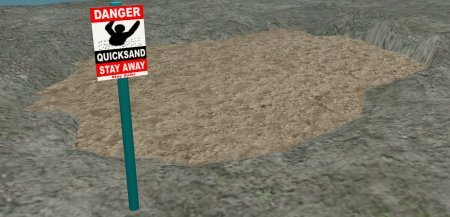
Preoccupied-Dismissive Pairing: Quicksand?

Preoccupied-Dismissive Pairing: Quicksand?

The Anxious-Preoccupied are frequently attracted to the intermittent reinforcement provided by the Avoidant, especially the apparently cool and self-sufficient Dismissive variety. I go into this at some length in the book:

Anxious-preoccupied types do poorly with each other—two needy, clingy people who do manage to calm each other’s insecurities exist as couples, but it’s rare, and the resulting relationship is closer to unhealthy codependence; neither will be strengthened by the bond. A mildly Preoccupied person can last with a mildly Avoidant sort, but the relationship tends to be unhappy as the bond is based on the unmet neediness of the Preoccupied and the willingness of the Avoidant to accept the attention without providing emotional security. A preoccupied person is much better off with a Secure who can gradually calm the preoccupied person’s insecurities by steady love and support, as in this case:

The preoccupied wife who had ambivalent attachment to her parent cannot believe her husband when he says, despite their fights and mutual dissatisfactions, that he genuinely loves her and wants to stay with her. She cannot assimilate it to her worldview, her internal model. She is sure he will abandon her, either because he already wants to or because her impossible and anxious neediness will eventually drive him out. But his steadfastness over the years builds her trust. It causes her to remember her relationship with a great uncle, whose love was precious and unwavering, and to think more and more about him and how good she felt about herself around him. Gradually, she assimilates her marriage to this model, and it becomes more central. Feeling more secure, she now finds herself freer to reflect on the past.[1]

Though it appears a preoccupied person might be better off with a secure partner, some research indicates that in this case opposites attract:

A number of studies have looked into the question of whether we are attracted to people based on their attachment style or ours. Two researchers in the field of adult attachment, Paula Pietromonaco, of the University of Massachusetts, and Katherine Carnelley, of the University of Southampton in the UK, found that avoidant individuals actually prefer anxiously attached people. Another study, by Jeffry Simpson of the University of Minnesota, showed that anxious women are more likely to date avoidant men. Is it possible, then, that people who guard their independence with ferocity would seek the partners most likely to impinge on their autonomy? Or that people who seek closeness are attracted to people who want to push them away? And if so, why? Pietromonaco and Carnelley believe that these attachment styles actually complement each other in a way. Each reaffirms the other’s beliefs about themselves and about relationships. The avoidants’ defensive self-perception that they are strong and independent is confirmed, as is the belief that others want to pull them into more closeness than they are comfortable with. The anxious types find that their perception of wanting more intimacy than their partner can provide is confirmed, as is their anticipation of ultimately being let down by significant others. So, in a way, each style is drawn to reenact a familiar script over and over again.[2]

This kind of complementary dysfunction can lead to a stable relationship, but one where both partners stay in their insecure styles, with the preoccupied battling for every scrap of attention and the avoidant one only giving enough to confirm his view of attachment as a necessary evil. These attractions are based on re-enacting the dysfunctional touch and response cycles of their early childhoods, and generally these couples report they are together despite their unhappiness.

Levine and Heller point out that the slights and intermittent reinforcement of the attractive avoidant male often trigger activation of the attachment system—producing intrigue and sparks. So what if he only answers your text messages days later, if at all? He’s hot and just hard-to-get enough that you really want him! This is the terrible mistake so many make: they meet a secure guy and it’s all so drama-free that they think he’s dull:

If you are anxious, the reverse of what happens when you meet someone avoidant happens when you meet someone secure. The messages that come across from someone secure are very honest, straightforward, and consistent. Secures are not afraid of intimacy and know they are worthy of love. They don’t have to beat around the bush or play hard to get. Ambiguous messages are out of the mix, as are tension and suspense. As a result, your attachment system remains relatively calm. Because you are used to equating an activated attachment system with love, you conclude that this can’t be “the one” because no bells are going off. You associate a calm attachment system with boredom and indifference. Because of this fallacy you might let the perfect partner pass you by.[3]

So armed with foreknowledge, a wise preoccupied person will seek out a Secure and avoid the sometimes attractive but ultimately unsupportive Avoidant of both flavors, as well as other Preoccupieds, who are likely to be the worst partners of all for them.

The relationships between Anxious-Preoccupied and Avoidant partners are especially problematic, because their mutually-reinforcing insecurities can lead to a stable but unhappy partnership that does little to help them grow more secure but can go on for years.

Remember that while attachment types are relatively fixed characteristics, almost everyone can display insecurities when the situation is stressful or their partner is triggering them: as when the Avoidant are withholding responses, creating anxiety in their partner; or when the Anxious-Preoccupied are peppering their normally Secure partner with demands for response, creating a desire to distance from excessive clinginess.

The Anxious-Preoccupied are driven by their need for attachment to jump quickly into relationships and to immediately see the latest one as the solution to their problems. They feel safe when their desired partner is near and reassuring, and anxious when apart, or when messages aren’t replied to immediately. While a Secure will assume the lack of response means their partner is simply busy or away from the phone, an Anxious-Preoccupied person will start to worry and wonder if something has gone wrong with their relationship. Since they are so concerned about their relationships, they will then act — with more and increasingly demanding messages and even more obsessive worry if there is no response.

The Preoccupied think that because they put their relationships above all other priorities, and work hard to maintain contact and do things for their partner, that they are owed the same level of attention and devotion. This level of commitment would be admirable if it came after a long relationship of mutual support and knowledge, but the Preoccupied tend to rope someone into partnership and start acting as if it was eternal and perfectly intimate long before they have really come to know and understand their latest partner-victim. In other words, they use their new partner to fill the hole in their attachment security without a true knowledge and appreciation of the partner’s history and feelings. This is self-centered and shows that real empathy can only be fully exercised from a secure base.

This entitlement attitude (“I am a devoted partner so I am owed the attention I deserve!”) leads to disappointment and anger when no real person can instantly be as thoughtful and devoted as the Preoccupied would require. The Preoccupied spend much time obsessing about these unintended slights and going over every detail of interactions in their heads, making up scenarios where they lose their partner, and then being tempted to make another play for reassurance. The anxiety they feel and the demands they make without regard to their partner’s state of mind or current ability to respond ultimately can drive away partners and friends.

The increasing percentage of Dismissives in the dating pool as time goes on means that older Preoccupieds will encounter more Dismissives than any other type. The intermittent reinforcement provided by a Dismissive — sometimes they will respond reassuringly, sometimes not — means that when the attachment system of the Preoccupied goes on alert, it finds its challenging match in the Dismissive’s refusal to play along. To some Preoccupieds this partial response is what they remember from significant caregivers, most typically their father, and the familiarity of this yearning is itself attractive.

The Dismissive, on the other hand, expects partners to be too demanding and troublesome, and that too confirms their view of others. One might expect Dismissives to seek out partners who are happy to accept greater distance in partnership, but that is not how it works out in practice; it as as if the Dismissive is most comfortable exercising the balance of power in the relationship, holding their struggling partner at a distance and just providing enough attention and reassurance to keep them on the hook.

Since they are reinforcing each other’s view of others, neither will get any more secure with time; the Dismissive will accuse their partner of being clingy or needy, while the Preoccupied will accuse their partner of being too distant and uncaring. They are fulfilling each other’s basic need to have a partner, but the partnership will always be troubled by their complementary insecurities. Yet it is more likely to be stable than a Preoccupied-Preoccupied partnership.

The single Preoccupied person would be wise to resist the tendency to fall for a Dismissive. This can be avoided by noting the red flags of the avoidant: not responding reassuringly to simple in-person requests, not showing much interest and concern for your feelings, and having a history of bad or no relationships. Superficial looks and accomplishments should not be seen as indicating that your new prospect is a success in emotional or relationship spheres. Always remember when you meet someone intriguing that you know next to nothing about their personality until you have seen them in many situations over many months. Don’t try to have a Significant relationship with someone until you have enough history with that person to be able to rely on their feelings for you. Remind yourself that there are many possible partners out there, and don’t settle emotionally on someone who may not be right for you just because they have shown you a little attention. It is meaningless unless it is sustained and reliable.

[1] Karen, p. 404
[2] Levine, Amir; Heller, Rachel (2010-12-30). Attached: The New Science of Adult Attachment and How It Can Help You Find—and Keep—Love. p/ 91, Penguin Group US
[3] Levine and Heller, p. 96


[Note: if you arrived here looking for insight into a dismissive or fearful-avoidant spouse or lover, I’ve just published a book on the topic: Avoidant: How to Love (or Leave) a Dismissive Partner. Right now available only from Amazon Kindle for $3.99 (or local currency equivalent), but by Oct. 15th a paperback should also be available.]


More reading on this topic:

“Why We Are Attracted to Bad Partners (Who Resemble a Parent)”
Dismissive-Avoidants as Parents
“Avoidant: Emotions Repressed Beneath Conscious Level”
“Anxious-Preoccupied / Dismissive-Avoidant Couples: the Silent Treatment”
““Bad Boyfriends” – Useful for Improving Current Relationships”
“Dating Pool Danger: Harder to Find Good Partners After 30”

More on Attachment and Personality Types:

What Attachment Type Are You?
Type: Secure
Type: Anxious-Preoccupied
Type: Dismissive-Avoidant
Type: Fearful-Avoidant (aka Anxious-Avoidant)
Avoidant: Emotions Repressed Beneath Conscious Level
Serial Monogamy: the Fearful-Avoidant Do It Faster
Anxious-Preoccupied: Stuck on the Dismissive?
Anxious-Preoccupied / Dismissive-Avoidant Couples: the Silent Treatment
nxious-Preoccupied: Clingy and Insecure Relationship Example
Domestic Violence: Ray and Janay Rice
Malignant Narcissists
Teaching Narcissists to Activate Empathy
Histrionic Personality: Seductive, Dramatic, Theatrical
Life Is Unfair! The Great Chain of Dysfunction Ends With You.
Love Songs of the Secure Attachment Type
On Addiction and the Urge to Rescue
Sale! Sale! Sale! – “Bad Boyfriends” for Kindle, $2.99
Controlling Your Inner Critic: Subpersonalities
“Big Bang Theory” — Aspergers and Emotional/Social Intelligence
Porn Addiction and NoFAP
Introverts in Management
Anxious-Preoccupied: Activating Strategies

High Maintenance

High Maintenance

My book, Bad Boyfriends: Using Attachment Theory to Avoid Mr. (or Ms.) Wrong and Make You a Better Partner, is more of an overview of attachment theory and its application to finding a good partner. The older popular book on the topic, Levine and Heller’s Attached: The New Science of Adult Attachment and How It Can Help You Find—and Keep—Love, is an excellent self-help guide focused more on case studies, and especially on the problems of the anxious-preoccupied who are more likely than the other types to seek out self-help books.

One of the topics they discuss in detail is hypervigilance — the anxious-preoccupied are intensely focused on keeping track of the emotional state of desired partners:

[A study found that people] with an anxious attachment style are indeed more vigilant to changes in others’ emotional expression and can have a higher degree of accuracy and sensitivity to other people’s cues. However, this finding comes with a caveat. The study showed that people with an anxious attachment style tend to jump to conclusions very quickly, and when they do, they tend to misinterpret people’s emotional state. Only when the experiment was designed in such a way that anxious participants had to wait a little longer— they couldn’t react immediately when they spotted a change, but had to wait a little longer— and get more information before making a judgment did they have an advantage over other participants.

Hair-trigger misjudgments and mistakes are more likely with this group and can get them into trouble. The anxious-preoccupied should work toward taking the time to consider all the evidence before reacting negatively, so their fine sensitivity to others’ emotional states will serve them better.

The anxious-preoccupied will sometimes explain that they feel very strongly and so can’t help themselves when overreacting to perceived threats to their relationships. The real explanation for their paranoia is not so much the intensity of feeling, however, as it is their insecurity and lack of understanding and trust in others’ good intentions. Because they are so wrapped up in the fear of losing attention or affection, they don’t take the time to see matters from the point of view of their significant other and so blunder into misunderstandings and attempts to control their partner through protest behavior.

Levine and Heller describe this behavior well:

Once activated, they are often consumed with thoughts that have a single purpose: to reestablish closeness with their partner. These thoughts are called activating strategies. Activating strategies are any thoughts or feelings that compel you to get close, physically or emotionally, to your partner. Once he or she responds to you in a way that reestablishes security, you can revert back to your calm, normal self. Activating Strategies:

• Thinking about your mate, difficulty concentrating on other things.
• Remembering only their good qualities.
• Putting them on a pedestal: underestimating your talents and abilities and overestimating theirs.
• An anxious feeling that goes away only when you are in contact with them.
• Believing this is your only chance for love, as in: “I’m only compatible with very few people—what are the chances I’ll find another person like him/ her?,” or “It takes years to meet someone new; I’ll end up alone.”
• Believing that even though you’re unhappy, you’d better not let go, as in: “If she leaves me, she’ll turn into a great partner—for someone else,, or “He can change,” or “All couples have problems—we’re not special in that regard.”

Protest behavior is a term originally coined to describe children’s screams and cries when separated from their caregiver, now applied by analogy to adult attempts to display unhappiness with a lack of attention or responsiveness from partners. Some protest behavior is part of every relationship — “Hey! You said you’d text me when you got home.” But the clingy, insecure anxious-preoccupied protest so frequently they run the risk of turning off and driving away their partners. When someone is said to be “high maintenance,” that means they are excessively needy and need more communication and reassurance than is reasonable. Protest behaviors are intended to force a reassuring response from the partner — and resorting to them frequently is bad for any relationship.

Levine and Heller have a good list of Protest Behaviors:

• Calling, texting, or e-mailing many times, waiting for a phone call, loitering by your partner’s workplace in hopes of running into him/ her.
• Withdrawing: Sitting silently “engrossed” in the paper, literally turning your back on your partner, not speaking, talking with other people on the phone and ignoring him/her.
• Keeping score: Paying attention to how long it took them to return your phone call and waiting just as long to return theirs; waiting for them to make the first “make-up” move and acting distant until such time.
• Acting hostile: Rolling your eyes when they speak, looking away, getting up and leaving the room while they’re talking (acting hostile can transgress to outright violence at times).
• Threatening to leave: Making threats—“ We’re not getting along, I don’t think I can do this anymore,” “I knew we weren’t really right for each other,” “I’ll be better off without you”—all the while hoping [partner] will stop you from leaving.
• Manipulations: Acting busy or unapproachable. Ignoring phone calls, saying you have plans when you don’t.
• Making him/ her feel jealous: Making plans to get together with an ex for lunch, going out with friends to a singles bar, telling your partner about someone who hit on you today.

Case of Anxious-Preoccupied Protest Behavior
Type: Anxious-Preoccupied

[The contents of this post have been added to the Type: Anxious-Preoccupied page.]